Ico Domestic Cctv Neighbour Checklist Uk
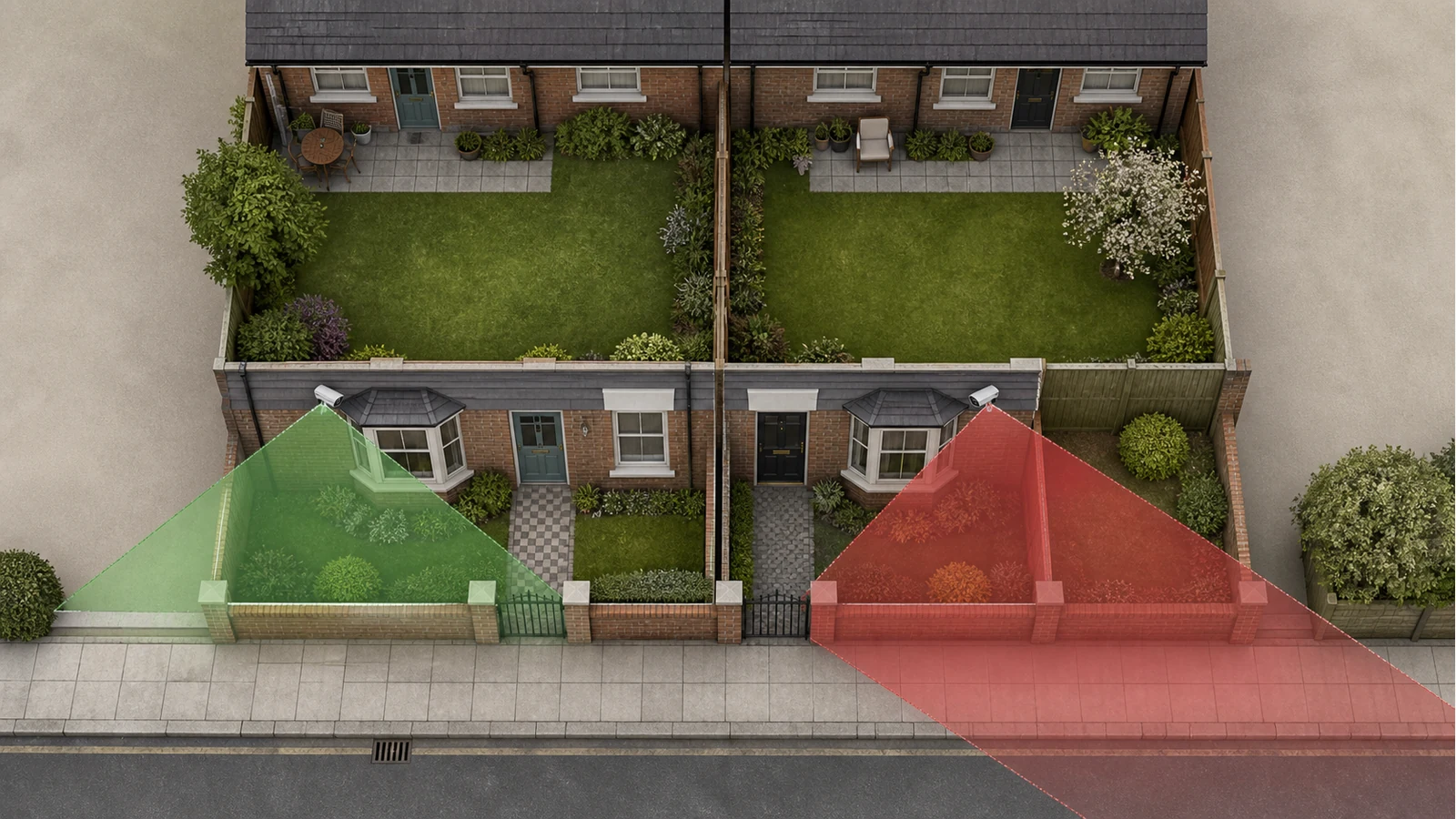
Direct answer: if your home CCTV only captures your own private boundary, household use is usually simpler. If it captures a neighbour's garden, a shared drive, a pavement, a road or a communal space, UK data protection duties may apply. This is practical guidance, not legal advice.
The ICO says domestic users should aim cameras at their own property where possible and explains that data protection rules apply when recording reaches beyond that private boundary. Start with the public ICO home CCTV guidance before deciding where to drill.
Checklist: Aim, Minimise, Explain
- Aim inward first. Reposition the camera before accepting overspill onto pavement, neighbouring windows or a shared route.
- Use the narrowest useful view. The goal is evidence for your door, car, side return or garden gate, not general observation of other people.
- Tell affected people plainly. If recording reaches beyond your boundary, GOV.UK guidance lists steps such as informing neighbours and using notices. Read GOV.UK domestic CCTV guidance.
- Store recordings securely. Limit who can view footage, keep passwords private and delete recordings when you no longer need them.
- Be ready for access requests. If data protection law applies, people captured by the system may have rights around footage that identifies them.
Common UK Boundary Cues
A front door camera can become more complicated when it sees the pavement. A side-return camera can become more sensitive when it sees a neighbour's window or shared alley. A rear camera can raise concerns if it looks over a fence into another garden. It is better to plan camera angles before mounting than to fix a dispute after the holes are drilled.
Stop Conditions
Pause the install if a planned angle mainly watches someone else's property, if you cannot explain why beyond-boundary capture is necessary, or if you are unwilling to secure, limit and delete footage properly. In those cases, repositioning is usually the first fix.
When There Is A Dispute
Talk first and be specific: which angle, which part of the image, which times of day, and what change would reduce concern? If that fails, mediation or formal advice may be more useful than arguing over equipment features. The ICO can give guidance, but homeowners should not assume it can simply order a neighbour to remove a camera in every case.
Sources
- ICO - ICO guidance says owners should aim cameras at their own property where possible; if someone else property, a public area, or communal space is captured, data protection rules apply.
- GOV.UK - GOV.UK domestic CCTV guidance links beyond-boundary capture to GDPR/DPA duties and lists practical steps: minimise intrusion, inform neighbours, put up notices, secure and limit retention of recordings.